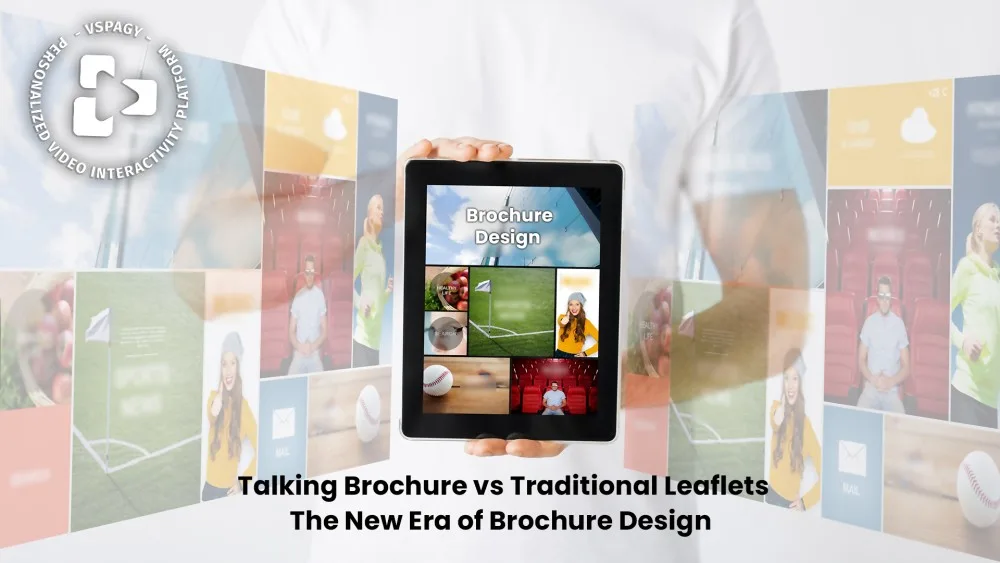
Talking Brochure vs Traditional Leaflets: The New Era of Brochure Design
Dec 01, 2025
Introduction
In the sphere of marketing, nothing ends up evolving. Brands can now communicate in an entirely different fashion as opposed to the minds still loyal to the stationary leaflet. The interactive digital brochure has transformed the relationship of the customers with information and feelings, and design.
The old leaflets that used to operate over many years will not be effective in the current world because the modern consumer requires engagement, interactivity, and personalization.
Combining creativity, data, and technology is the brochure talk and next-generation tools. This new age of designing a brochure considers the experience and thus all the interactions that occur are meaningful and quantifiable.
The Decline of Traditional Leaflets
Brand promotion once had traditional leaflets and printed brochures. They were not very expensive, physical, and distributable. But in the digital-first world, these paper-based designs are becoming less relevant.
Fixed formats, mass messages, and unidirectional communication are no longer effective for the current audiences. In comparison, an interactive digital brochure or a talking brochure provides a two-way interactive, immersive experience, allowing a brand to literally talk to its audience by enabling audio, video, and interactivity in the document.
With the hyper-personalization journey underway by brands, the traditional forms understand they are not adaptable. Now, customers require information that is specifically provided to them, ready to get, and available anywhere and on any device.
The Rise of the Talking Brochure
Here, the talking brochure, a combination of digital storytelling and personalization, is the next stage in marketing communication. These brochures are interactive as opposed to traditional leaflets (they have voiceovers, videos, and links that people can click), where information is converted into a discussion.
As an example, an automotive company can utilize a talking brochure to welcome a potential buyer by name, showcase car specifications with an in-built video, and then refer the buyer to a reservation page, and that too in the same brochure.
This method is combined with the brochure talks to provide an exciting and unforgettable experience. Customers do not just read passively, but also interact, listen, and respond. This is why brands in all industries are turning to this new format of storytelling - from fashion to Personalized Banking.
What Makes Interactive Digital Brochure Game-Changers
An interactive digital brochure is a trending marketing strategy that lies between the old-fashioned brochures and entirely online marketing. It is a mix of the flexibility of a PDF with an interactive and analytical feature.
The marketers have an opportunity to incorporate a clickable call to action, animation, video, and image customization, offering pictures that are specific to a particular user. Indicatively, the customer is shown their name and the skyline of a city in a real estate brand brochure, and this automatically gives them a sense of familiarity and exclusivity.
However, in addition to the aesthetics, an interactive digital brochure has measurable insights. The amount of time a customer spends on a specific page, what videos they watch, and where they click has all been tracked, and thus becomes easier to streamline content and increase activity or engagement.
How Hyper Personalization Elevates Modern Brochures
The current brochure design revolves around hyper-personalization. It is more than just using the name of a person; every aspect, including images or deals, is customized using real-time information.
Hyper-personalized design can be combined with a talking brochure to present every customer with the impression of the content being written specifically to them. Consider being welcomed by name and having products suggested about your purchase history and style preferences in festively opening a greeting brochure.
These kinds of innovations restructure brand interaction. In retail, in healthcare, and in Personalized Banking, the hyper-personalized brochures transform passive viewers into active ones.
The Role of Image Personalization in Engagement
The visual communication is always powerful, particularly when image personalization is involved, which takes it to a new level. Brands are no longer using generic visuals of products but showing images that vary according to the user's information.
These images also change automatically in an interactive digital brochure and present a relevant object, a regional theme, or personalized greetings to a particular recipient. As an example, a travel brand may show the cover image of the preferred destination of a user, whereas a financial brand may use the picture of a local branch manager of the user.
And this minor personalization yields immediate recognition, trust, and a relationship. It is not merely a matter of technology but about the customer who has to feel as being everything to the company.
Talking Brochures vs Traditional Leaflets: A Comparative Look
| Feature | Traditional Leaflets | Talking Brochure |
|---|---|---|
| Interactivity | Static text and images | Embedded videos, audio, and clickable links |
| Personalization | Same design for all | Uses hyper personalization and image personalization |
| Engagement | Low attention span | Dynamic storytelling and analytics |
| Update Flexibility | Requires reprint | Instantly editable and shareable |
| Eco-Friendliness | Paper-based | 100% digital, sustainable |
| Customer Experience | One-way message | Two-way interactive experience |
Brochure Talks: When Design Starts a Conversation
Brochure Talks is not just about the digital document creation; it is about dialogue design. A properly designed online brochure has the capability of influencing the customer experience intuitively, like a guided sales rep.
The brochure responds to a click of the user on a link or a video and makes it look like a conversation. The type of marketing material that will be created will foster curiosity and nurture users into converting, naturally, and this is achievable through an interactive digital brochure.
This interactive flow enhances interaction and generation of leads and does not come across as intrusive. It is structured, empathetic storytelling, which is the secret to the success of modern marketing.
Personalized Banking and the Future of Relationship Marketing
This is because the financial sector, which used to operate in static communication, has recently adopted the format of talking brochure with Smart PDFs. With personalized banking, as one example, the institutions can mail digital brochures that have customized investment choices, relationship manager videotaped greetings, and dynamic charts that show portfolio performance.
This kind of real-time customization creates customer loyalty and trust. Banks no longer provide cold and formal messages, but they provide emotionally charged and graphically rich experiences. This is a way of humanizing the brand and strengthening its credibility and innovation.
Sustainability and Scalability: Why the Shift Makes Sense
The fact that switching from traditional leaflets to an interactive digital brochure is a smart upgrade in technologies and a responsible choice for the business. Online brochures reduce paper, printing expenses, and logistics, and expand indefinitely.
You can produce talking brochures in seconds, no matter what part of the world you are in, or whether you are a local or global boutique, you can target thousands of people without the need to print your brochures.
On-the-fly analytics allow constant enhancement and, therefore, every campaign is more effective than the previous one was. Following the movement towards a more data-driven and sustainability-conscious marketing landscape, however, digital versions of brochures will become the leaders of earth-conscious communications.
Frequently Asked Questions
How is a Talking Brochure different from a traditional leaflet?
Traditional leaflets are static, printed materials with limited space and no interactivity. Talking Brochures are digital, interactive, personalized, and trackable, offering richer storytelling and better customer engagement.
Why are Talking Brochures becoming popular?
They offer higher engagement, real-time analytics, personalization, multimedia elements, and a modern customer experience-making them more effective in driving conversions than traditional leaflets.
Do Talking Brochures replace printed leaflets entirely?
Not necessarily. Talking Brochures complement or replace print depending on the campaign goal. Many brands use both-print for physical reach and Talking Brochures for digital engagement and personalization.
Can Talking Brochures be personalized?
Yes. They can be fully personalized with names, demographics, product preferences, offers, account details, appointment times, and more making each experience unique.
How are Talking Brochures delivered to customers?
They can be shared via SMS, WhatsApp, email, QR codes, landing pages, social ads, and even embedded into apps or websites.
Conclusion
The question is whether it is talking about brochures or even the old-fashioned leaflets that did not manage to survive: the future of brochures is in the interactive, smart, and emotionally involved storytelling. The center of the change lies in the interactive digital brochure that combines design innovation and data understanding.
Related Blogs:
-
What are Human AI-Generated Avatars?
-
Boost Your Business With Marketing Automation
Checkout other stories